%201.png)
What Is a Certified Compostable Bag? And How Is It Different From a Regular Plastic Bag?
A clear guide to what certified compostable bags are made from, how they break down, which certifications matter in India, and how they compare with ordinary plastic bags.
Preparing voices…
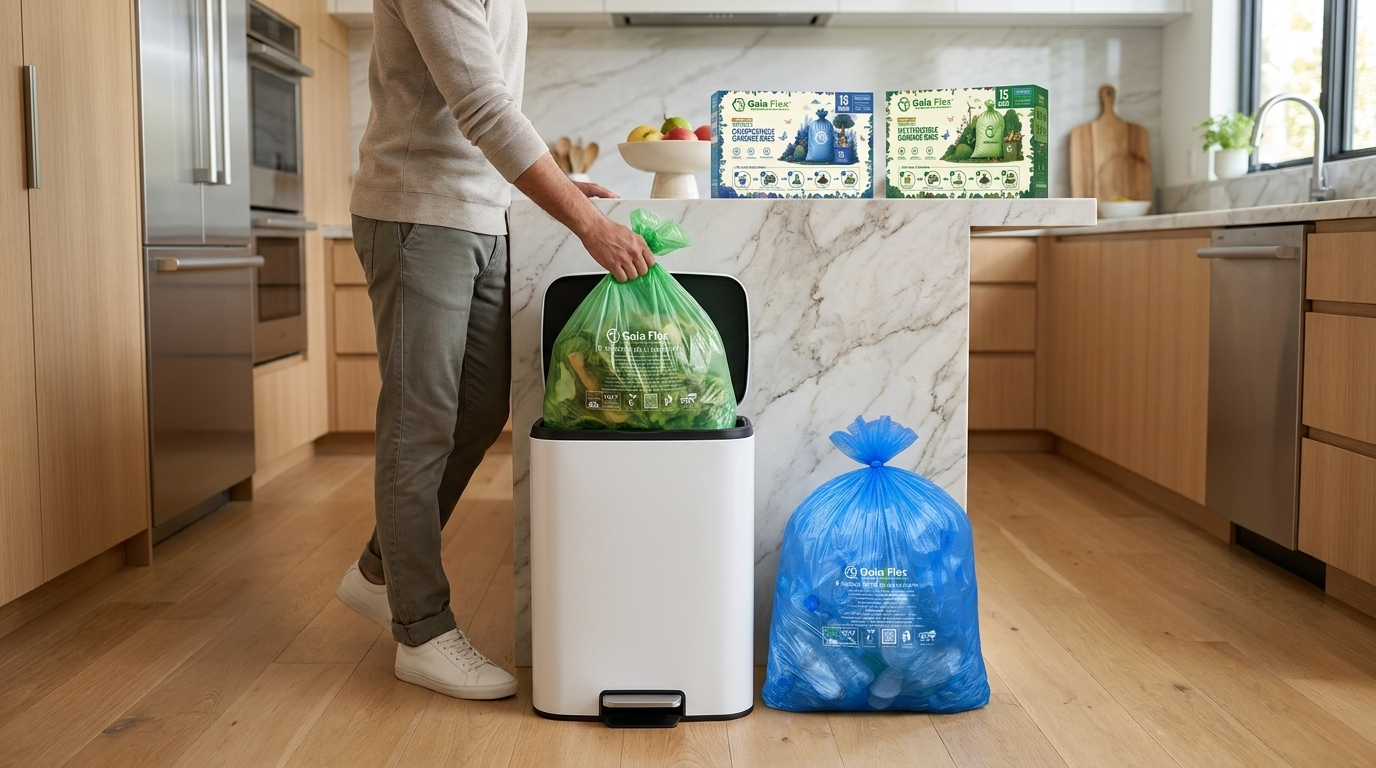
A certified compostable bag is made from biodegradable materials such as PBAT and PLA. PLA comes from plant sources such as corn starch, while PBAT is a biodegradable polymer usually derived from petrochemical sources.
These bags are independently tested to break down completely into water, carbon dioxide, and organic matter within 180 days under industrial composting conditions. A regular plastic bag cannot do that. Instead, it can remain in the environment for hundreds of years.
In India, the standard used to establish that a bag is genuinely compostable is IS/ISO 17088, regulated through the Central Pollution Control Board.
Certified compostable bags are designed to fully return to natural matter under controlled composting conditions. Regular plastic bags only fragment into smaller pieces over time.
What Makes a Bag Truly Compostable?
So, what is a compostable bag, really? Here is the simple version. A truly compostable bag is not made from conventional plastic. It is made from materials such as PLA, which is plant based, and PBAT, a biodegradable polymer, that microbes can break down.
That is the key difference. Compostable does not mean a bag magically vanishes on its own. It means the bag has been tested under specific conditions to fully turn into water, carbon dioxide, and organic matter within a defined period.
If a bag has not been tested and certified in this way, it should not be treated as genuinely compostable simply because the packaging says so. For anyone shopping for a compostable bag in India, the certification matters more than the wording printed on the front of the pack.
.png)
How Is It Different From a Regular Plastic Bag?
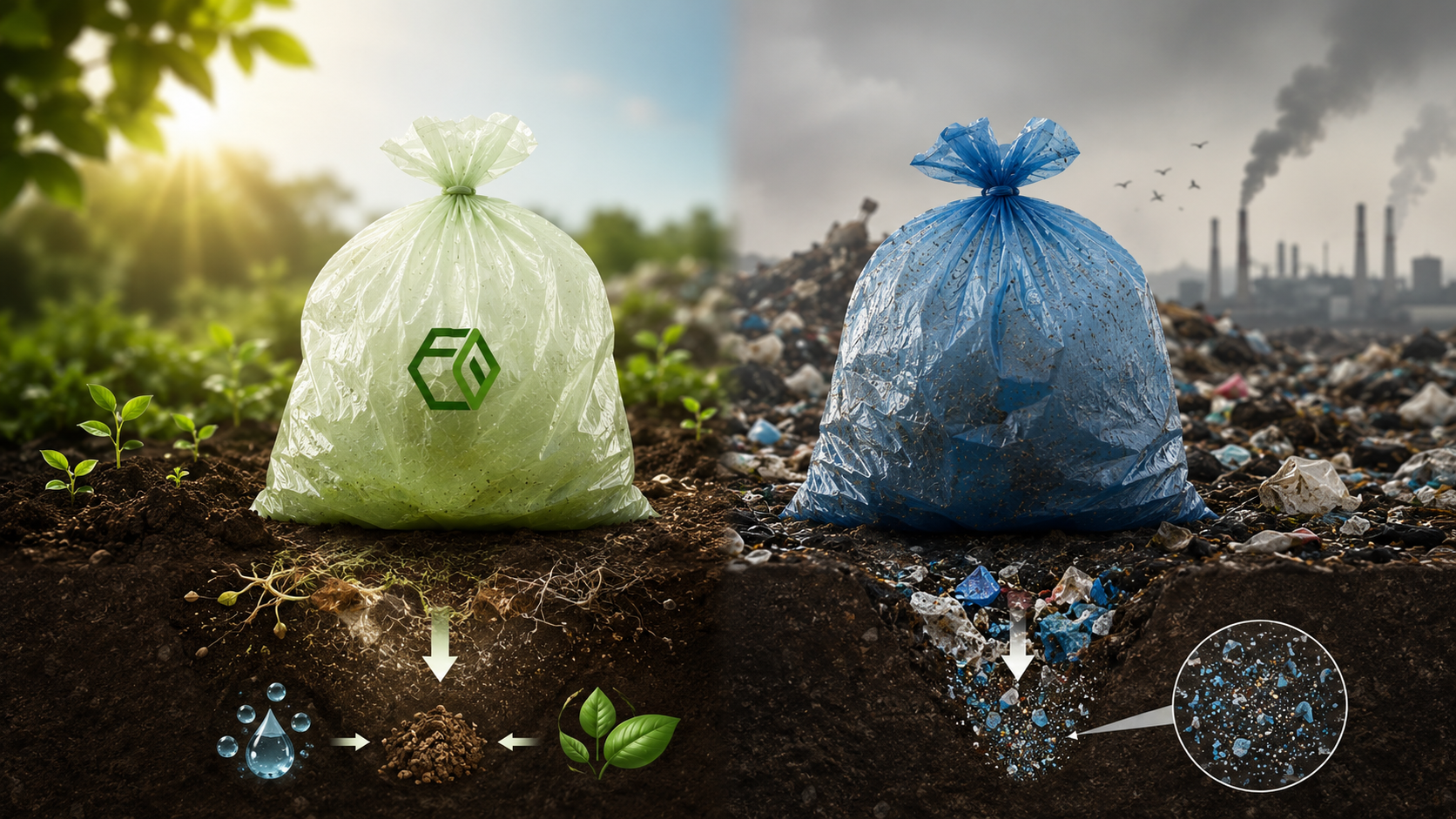
Think of two bags sitting in a landfill. This is the classic compostable versus plastic bag comparison, and the difference is bigger than most people expect.
The plastic bag is made from fossil fuels. It does not fully break down; it breaks apart. Over time, sunlight and weather can grind it into smaller pieces called microplastics. Some estimates suggest that a plastic bag can remain in the environment for hundreds of years, though the exact period varies by study and environmental conditions.
A certified compostable bag works differently. Under industrial composting conditions, it is designed to break down at the molecular level within 180 days. Once the process is complete, it should leave no plastic or microplastic residue.
| Comparison | Certified Compostable Bag | Regular Plastic Bag |
|---|---|---|
| Made from | Biodegradable materials including plant-based PLA and typically petrochemical-based PBAT | Fossil-fuel-based polyethylene |
| Breaks down in | Within 180 days under industrial composting conditions | Does not fully break down and instead fragments over a long period |
| Leaves behind | Water, carbon dioxide, and organic matter | Microplastics and persistent fragments |
| Certification required | Yes, including IS/ISO 17088 and CPCB registration in India | Not applicable |
| Legal position in India | Permitted when appropriately certified and registered | Subject to restrictions under India’s Plastic Waste Management Rules; current thresholds should be verified |
What Certifications Should You Look For?
Not every bag that claims to be “green” or “eco” has been independently verified. Certifications are how shoppers and businesses can check the claim.
IS/ISO 17088
India’s standard for compostable plastics. Look for this exact reference when evaluating whether a product is represented as an IS 17088 bag.
CPCB Registered
A genuine CPCB certified bag should carry a printed registration number associated with its approval.
TÜV Austria
OK Compost Industrial certification provides an additional international compostability reference.
CIPET Tested
Independent testing may also be carried out by the Central Institute of Plastics Engineering and Technology.
Gaia Flex wet waste bags are represented as IS/ISO 17088 certified and CPCB registered, meaning the claims on the pack are intended to be supported by external verification rather than brand wording alone.
Why Certification Matters, Not Just the Label
Anyone can print “biodegradable” or “eco-friendly” on a bag. Those words alone do not prove that a product has passed a defined compostability test.
Certification is different. It means a bag has been assessed by an independent body against a specific standard and approved only after meeting the required criteria. That is the difference between a marketing phrase and a verified claim.
Do not look only for a leaf symbol or the word “green.” Look for the certification standard and registration number.
Frequently Asked Questions
Is a compostable bag the same as a biodegradable bag?
No. “Biodegradable” is a broad term and, by itself, does not show that a bag has passed the testing required for certified compostability. “Certified compostable” refers to a product assessed against a defined standard.
Does a compostable bag break down in a normal dustbin at home?
Not usually. Certified compostable bags are designed to break down under industrial composting conditions involving controlled heat, moisture, oxygen, and microbial activity.
How long does a certified compostable bag take to decompose?
A genuinely IS/ISO 17088-certified bag is designed to break down within 180 days under industrial composting conditions.
Shop Gaia Flex Certified Compostable Bags
Choose bags designed to do the job properly, then break down under the right composting conditions.