%201.png)
What Happens to a Compostable Bag After It Goes Into the Bin?
A step-by-step guide to collection, industrial composting, microbial breakdown, what remains after 180 days, and what changes when a compostable bag reaches landfill instead.
Preparing voices…
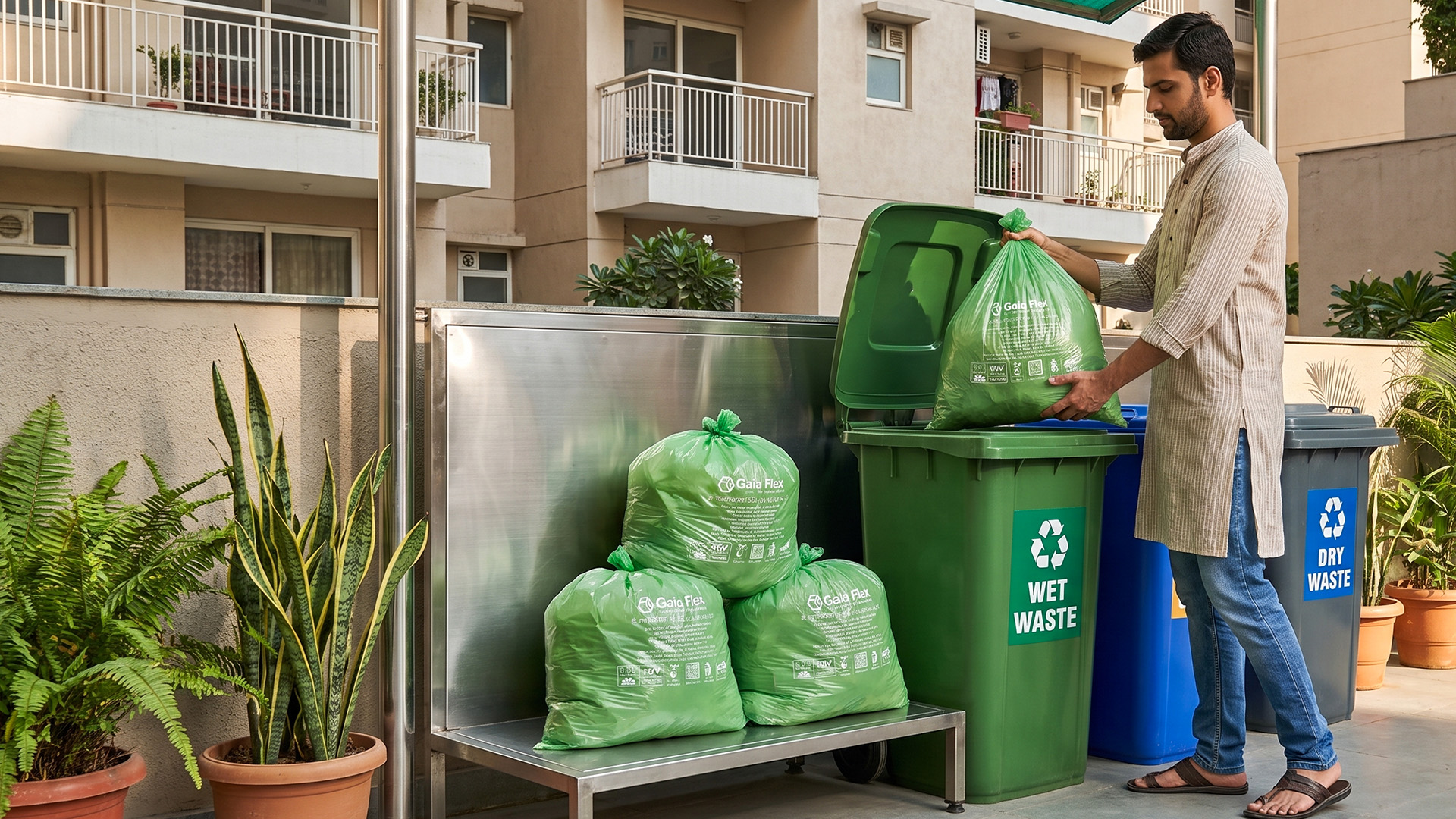
After a certified compostable bag goes into the bin, it gets collected along with wet organic waste and sent to an industrial composting facility. Under controlled heat, moisture, oxygen, and microbial activity, the bag is designed to break down within 180 days into water, carbon dioxide, and organic biomass, with no microplastics or toxic residue left behind.
This is what separates a genuinely certified compostable bag from a regular plastic bag. Conventional plastic can persist in the environment for hundreds of years and physically fragment into smaller pieces instead of being consumed by microbes.
Collection, controlled composting conditions, microbial activity, and verified decomposition all work together. The destination matters just as much as the material.
Step 1: Collection and Transport
Once the bag is tied off and put out with wet waste, it gets picked up during regular waste collection and transported to a facility equipped for industrial composting.
This is where the compostable bag industrial composting process begins. It is a very different destination from where a regular plastic bag usually ends up.
.png)
Step 2: Industrial Composting Facility
At the facility, waste is processed under carefully controlled conditions: specific temperature ranges, controlled moisture levels, and a steady supply of oxygen.
These conditions allow full decomposition to happen reliably within a defined timeframe. That is very different from the unpredictable, open-ended breakdown of an ordinary backyard compost heap.
Step 3: Breakdown Through Microbial Activity
This is where the actual chemistry happens. Naturally occurring microbes in the compost pile recognize the bag’s plant-based and biodegradable materials, including PBAT and PLA, as food.
They metabolize those materials in the same way they metabolize vegetable peels and food scraps.
That is the core difference from regular plastic. Conventional plastic does not get consumed by microbes. It physically cracks apart into smaller and smaller pieces. PBAT and PLA decompose because microbes actually consume them, which is why nothing plastic-like should remain at the end of a successful industrial composting cycle.
Step 4: What Is Left After 180 Days?
By the end of the 180-day cycle, a genuinely certified compostable bag has turned into water, carbon dioxide, and organic biomass, the same basic byproducts as other composted organic material.
No microplastic fragments. No toxic residue.
Gaia Flex bags are designed to complete this decomposition cycle under IS/ISO 17088 certified conditions. That means the expected outcome has been tested and verified rather than simply assumed.
What If It Goes to a Landfill Instead?
Here is the honest part. If a certified compostable bag ends up in a landfill instead of an industrial composting facility, it will not decompose on the same 180-day timeline.
Landfills typically lack the heat, oxygen, moisture control, and microbial activity that industrial composting provides, so breakdown slows down considerably.
This is not a flaw specific to compostable bags. It reflects how compostability standards are designed to work, under industrial composting conditions. It is also why proper waste segregation matters. A compostable bag delivers its full benefit when it reaches a composting facility rather than a landfill.
| Comparison | Industrial Composting Facility | Landfill |
|---|---|---|
| Conditions | Controlled heat, moisture, and oxygen | Uncontrolled and often low in oxygen |
| Decomposition timeline | 180 days for certified bags under specified conditions | Significantly slower and not guaranteed |
| End result | Water, carbon dioxide, and organic biomass | Breakdown may be incomplete or delayed |
Frequently Asked Questions
How long does a certified compostable bag take to fully decompose?
It is designed to decompose within 180 days under industrial composting conditions specifically.
Does the bag need to be opened or emptied before composting?
No. At facilities designed to handle certified compostable bags, the whole bag and its organic contents can go through the process together.
Will a compostable bag decompose the same way in a landfill?
Not on the same timeline. Landfills generally lack the controlled heat, moisture, oxygen, and microbial activity provided by industrial composting facilities, so decomposition slows down significantly.
Shop Gaia Flex Certified Compostable Bags
Explore certified compostable bags designed for wet waste, daily use, and industrial composting conditions.